We’re Here 24/7 — Speak With a Live Houston Agent Anytime:  346-360-4444
We’re Here 24/7 — Speak With a Live Houston Agent Anytime: 346-360-4444
Galveston County, TX
Major Flood Damage & Distressed
13 Days
Major Flood Damage
Dale Street runs through the older, bay-side part of Galveston’s West End, a short distance off San Luis Pass Road on Galveston Island. It is the kind of street where most of the houses went up in the mid-1950s and sit raised on piers, with lattice skirting underneath and palms in the front yards — practical construction for a strip of land that has weathered more than its share of storms. The owner of this property came to Volcan Property Buyers after major flood damage left the home in a condition no traditional buyer was going to take on. Repairs meant gutting the lower level and starting over, and the house was never going to pass a lender’s inspection in the state it was in. They wanted a straightforward cash sale and a quick close, not three months of contractor bids and financing fall-throughs. As local cash home buyers who work across Galveston County every week, flood-damaged and distressed island property is exactly what we handle. We bought this one precisely as it stood and closed in 13 days.
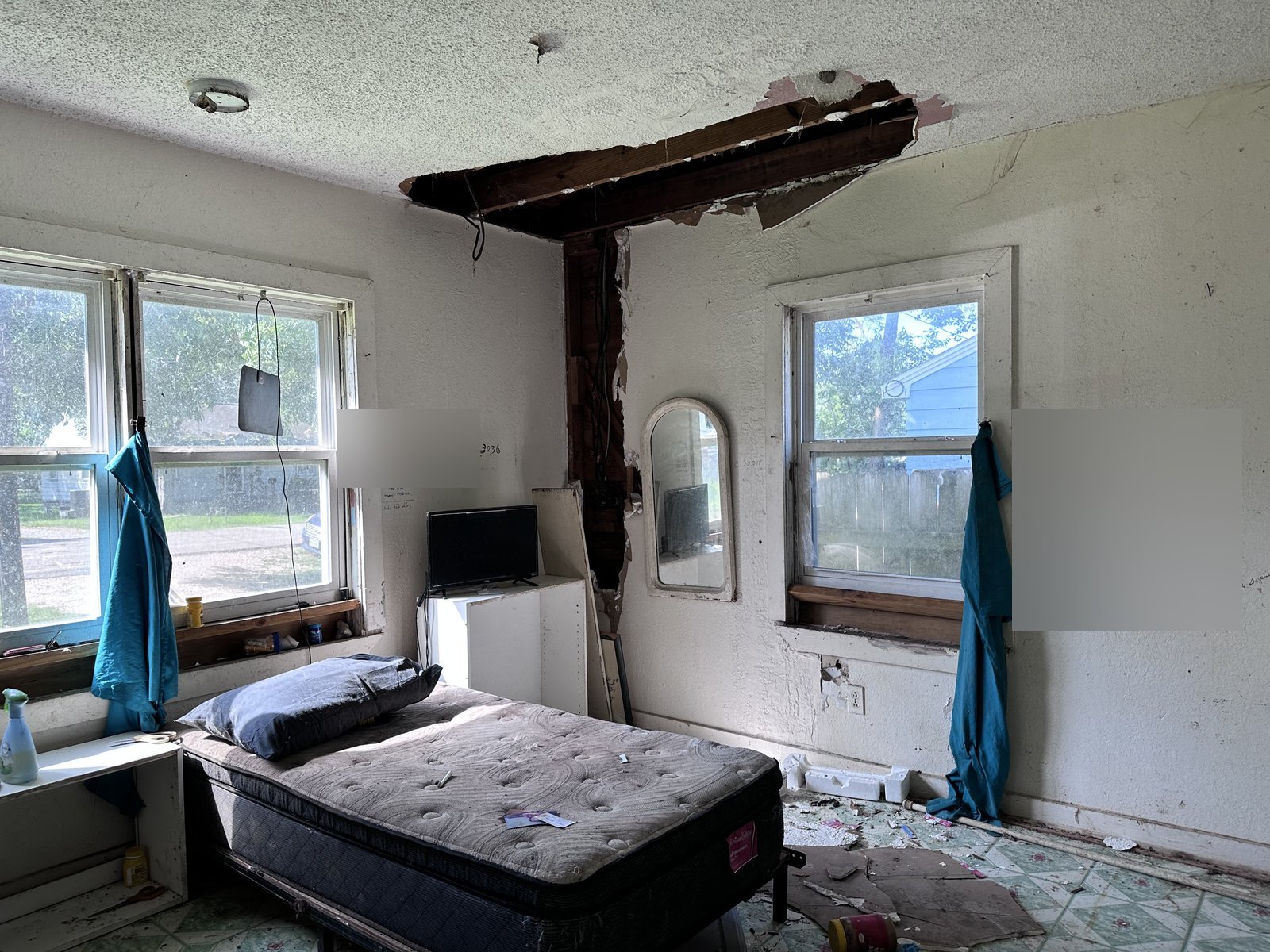
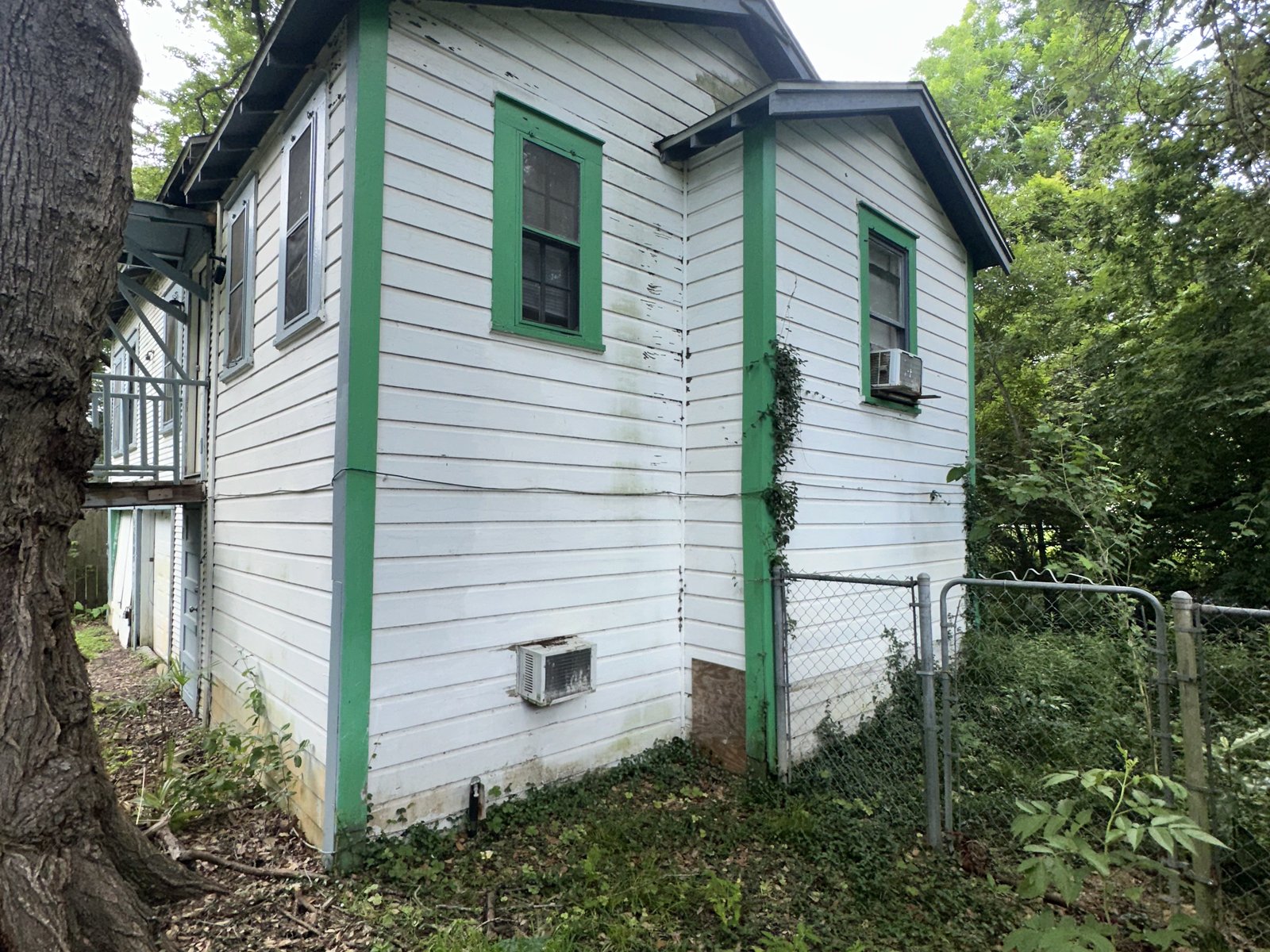
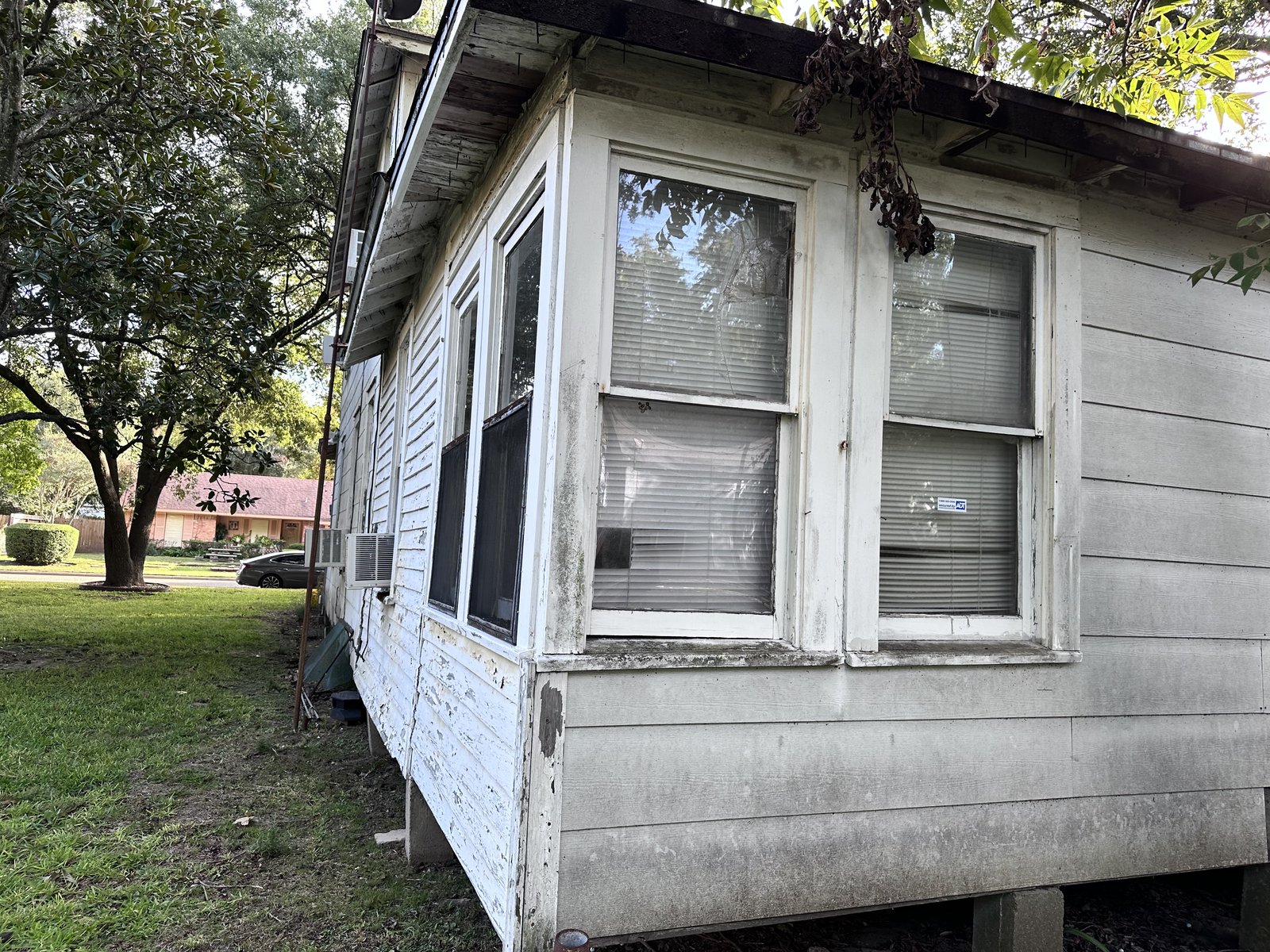
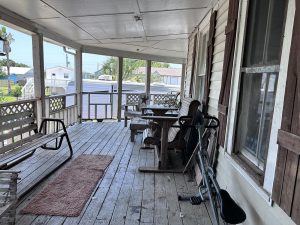
The house is a two-storey frame home elevated on brick piers, with a covered porch running along the front and a second deck above it. From the street it still reads as a solid island house — the roofline is intact, the siding is on, the palms have grown in around it. Most of the damage was where you would expect it on the West End: at and below the flood line, working its way up through the finishes.
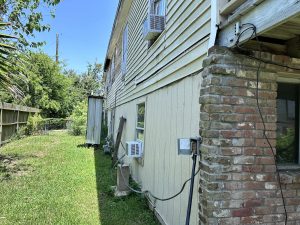
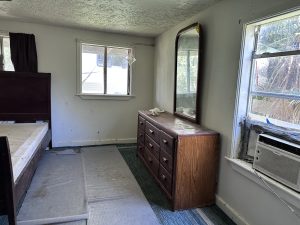
Flood damage is rarely just about the water. By the time we walked the property, the moisture had been in the structure long enough to leave staining along the base of the interior walls, ruined carpet and pad throughout, and the smell that tells you the subfloor is going to have to come up too. Window units were doing the cooling. Some of the windows had been taped and patched rather than replaced. The exterior showed the same pattern of deferred work — weathered decking on the porch, a railing that had gone soft in places, exposed wiring run along the side wall and a utility panel that had clearly been reworked more than once.
Individually, none of that is unusual for a house of this age on the island. Together, and on top of a documented flood loss, it put the property firmly outside what a retail buyer could finance. A conventional or FHA lender would have required the repairs completed before funding, and an insurer was not going to write a new policy on the structure in that condition. The realistic pool of buyers narrowed to cash investors — and the owner did not want to spend the summer fielding lowball offers and inspection renegotiations from people who might not close at all.
We made a cash offer on the property as-is, with no repair requests, no inspection contingency and no financing to fall through. The owner did not have to clear the house out, patch anything, pull permits, or deal with the flood documentation. Everything that was left behind stayed where it was — we handled it after closing.
From there it was a title matter and a calendar question. We opened with a local title company, the search came back clean, and we let the owner pick the closing date. They chose the earliest one available. Thirteen days after the first conversation, the sale funded and the seller walked away from a house that had been costing them money and worry every month it sat.
Dale Street sits in Galveston’s 77554 ZIP, on the West End of the island — the long, low stretch that runs southwest from the Seawall out towards San Luis Pass. San Luis Pass Road, the two-lane spine of the West End, carries everything out here, with the Gulf on one side and West Bay on the other. The housing on this part of the island is a mix: 1950s and 1960s frame homes on small lots of around a sixth of an acre, sitting on quiet dead-end streets, alongside newer raised builds and canal-front properties in the surrounding subdivisions. Spanish Grant, Bay Harbor and Sunny Beach are the neighbouring bay-side communities; Pirates Beach, Jamaica Beach and Galveston Island State Park lie further west along the same road.
It is roughly fifteen to twenty minutes back east to the Seawall, the Strand, UTMB and Moody Gardens, and about the same again to the causeway and the mainland. Ownership out here comes with a specific set of costs that shape the market: windstorm coverage through the Texas Windstorm Insurance Association, separate flood insurance, elevation certificates, and the steady work that salt air demands of roofs, siding and decking. Ownership is split between full-time islanders, weekenders and rental owners — which means houses here can sit vacant for long stretches, and small problems have time to become large ones.
If you own a flood-damaged house in a coastal community like Galveston, there is one rule that quietly decides what your repair bill is going to look like, and most owners only meet it after the water has gone down. It is the substantial improvement / substantial damage rule — usually just called the 50% rule.
The principle is simple. If the cost of repairing a structure equals or exceeds 50% of the building’s market value before the damage occurred, the local floodplain administrator can classify the work as substantial. Once that determination is made, you are no longer just repairing a house. You are required to bring the entire structure into compliance with current floodplain regulations — which, on Galveston Island, generally means elevating it to or above the Base Flood Elevation for that location.
That single classification can turn a $70,000 repair into a project involving engineered plans, permits, a house-raising contractor and a new elevation certificate. Some jurisdictions also apply the test cumulatively, adding up improvements over a period of years, so a house that has been repaired twice before can trip the threshold on a third, smaller job.
A few things worth knowing if you are in this position. Your pre-damage market value is usually taken from the county appraisal district’s structure value — not the land, and not what you paid. If you carry an NFIP flood policy, Increased Cost of Compliance coverage may pay up to $30,000 towards elevating or demolishing a substantially damaged home, but it only pays once the substantial damage determination is formally made. And a determination on file follows the property: any buyer relying on a mortgage will encounter it, which is a large part of why substantially damaged homes so often end up selling for cash.
None of this means you are stuck. It does mean the honest comparison is rarely “repair versus sell” — it is “elevate the house versus sell it as it stands.” We buy flood-damaged homes throughout Galveston County exactly as they are, with the determination in place or pending, and we close on the seller’s timeline.
Galveston County stretches from the Gulf beaches of Galveston Island north along I-45 through Hitchcock, La Marque and Texas City. It's a county shaped by water and industry — the Port of Galveston and UTMB anchor the island, while the refineries and petrochemical plants along the Texas City ship channel have employed generations of Mainland families. Much of the housing stock reflects that history: 1940s–1960s worker homes on the Mainland, and a mix of raised coastal builds, historic bungalows and Victorian-era homes on the island. Windstorm and flood coverage, elevation requirements and salt-air wear make ownership costs here different from anywhere else in the Houston area. Volcan Property Buyers purchases homes throughout Galveston County for cash, in any condition, with no repairs, no commissions and no lender delays.
See all Galveston County, TX properties we've closed →Or call us now :