We’re Here 24/7 — Speak With a Live Houston Agent Anytime:  346-360-4444

We’re Here 24/7 — Speak With a Live Houston Agent Anytime: 346-360-4444
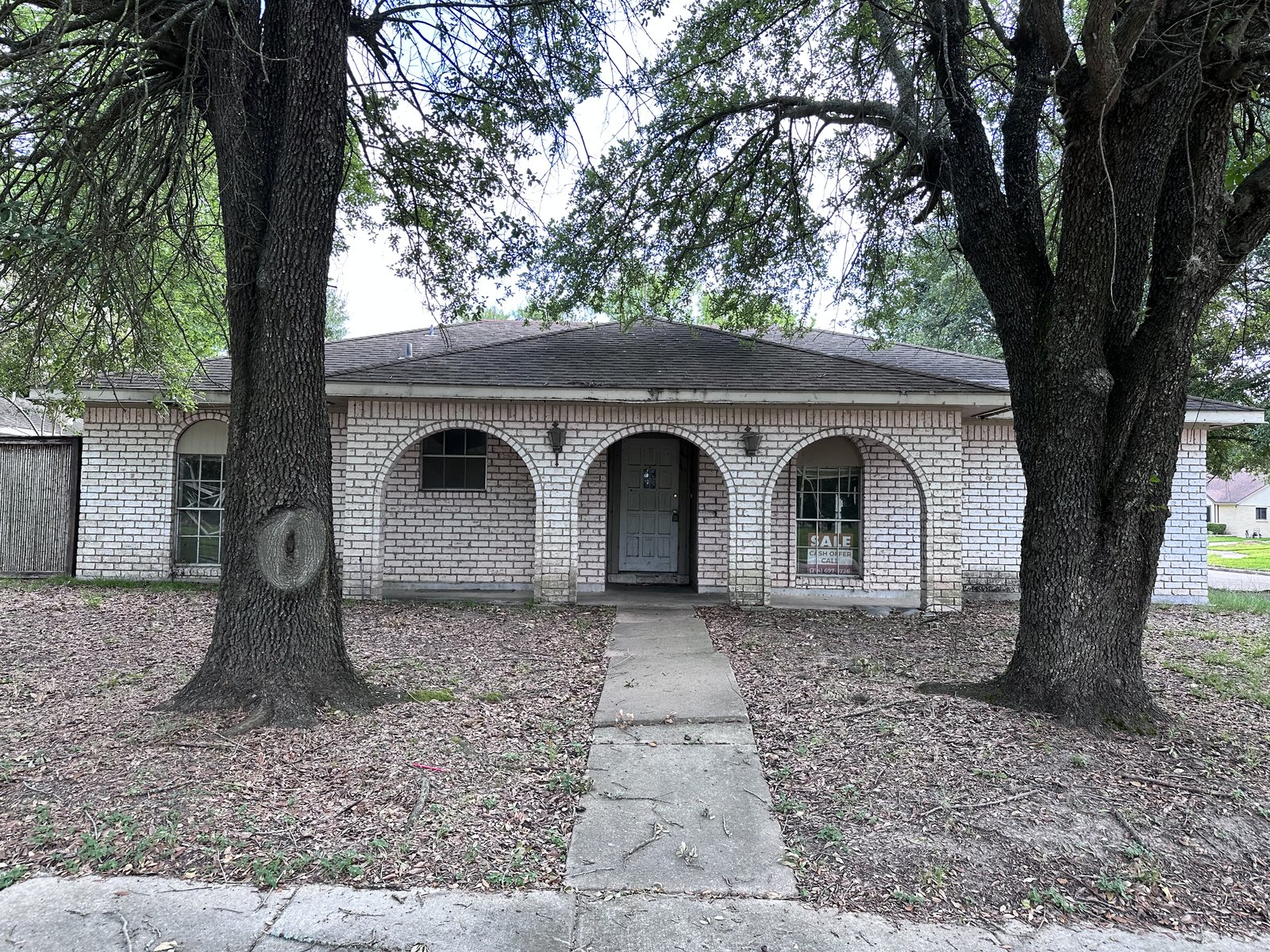
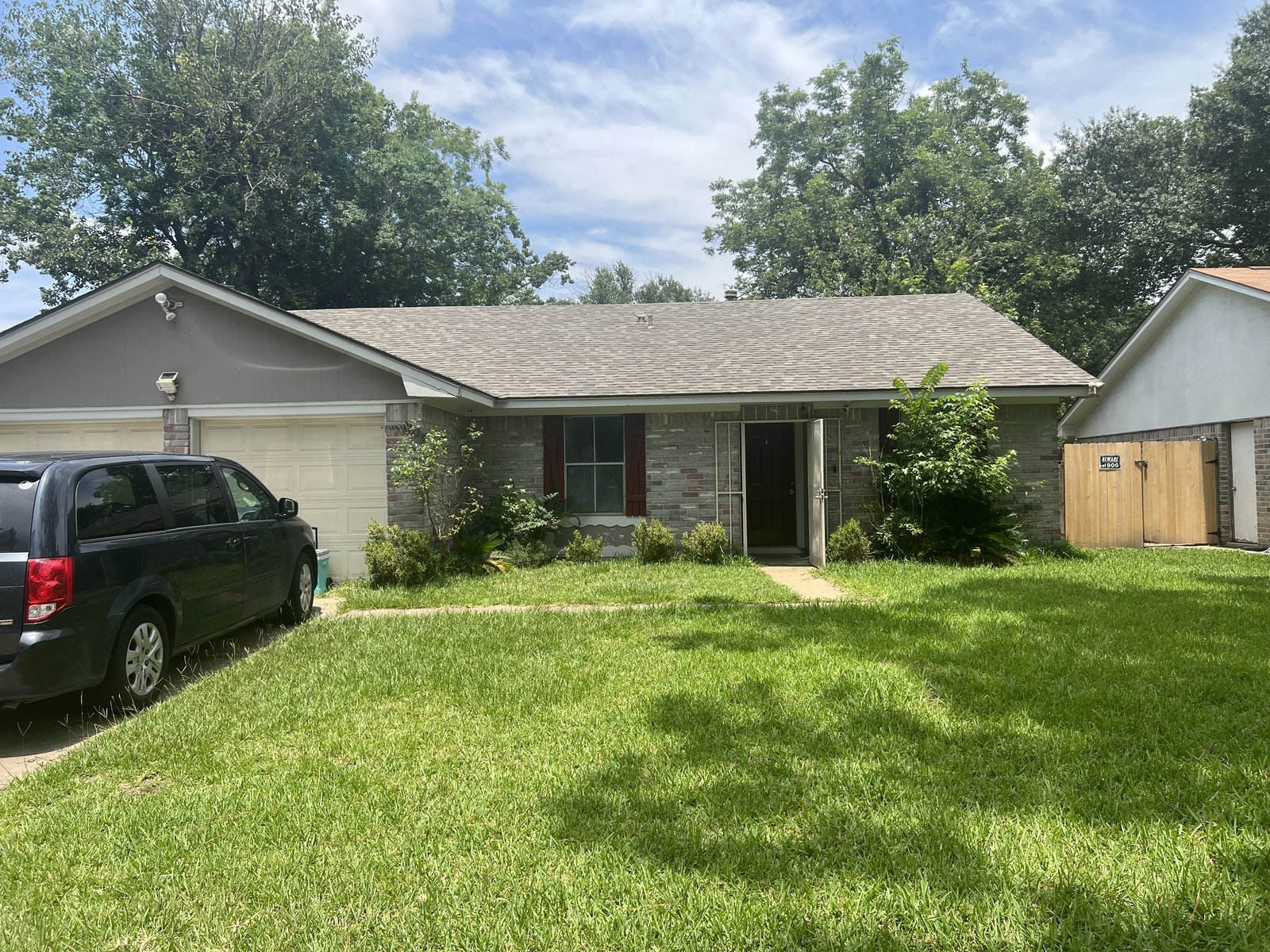
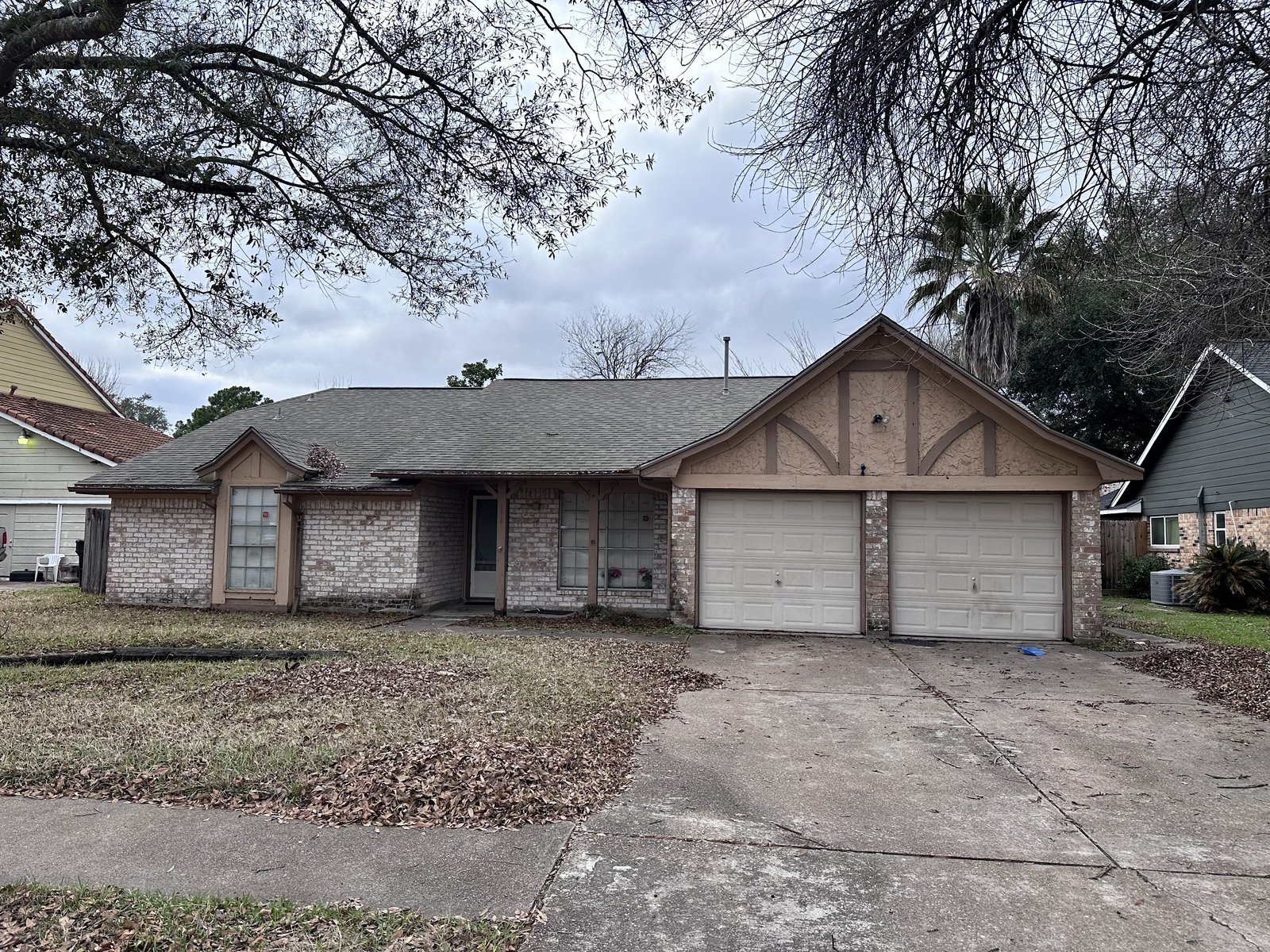
Twisting Vine Lane runs through Woodland Trails, a deed-restricted subdivision of early-1970s homes off the U.S. 290 corridor in the 77040 part of northwest Houston, Texas. It is a neighbourhood that takes its appearance seriously — a community association, a pool, a park pavilion and greenbelt trails that back directly onto a good number of the lots. Which is exactly why an empty house on this street could not stay quiet. The owner had moved out and, at some point that nobody could name precisely, simply stopped coming back. The furniture stayed. The decorations stayed. The grass kept growing, the trim kept peeling, and the letters from the association kept arriving at an address where nobody was reading them. By the time the family decided to deal with it, the question was no longer whether to fix the house up — it was how to end the obligation as quickly as possible. They called Volcan Property Buyers, cash home buyers in Houston, to sell the house fast in Houston exactly as it stood. We closed twenty-six days later.
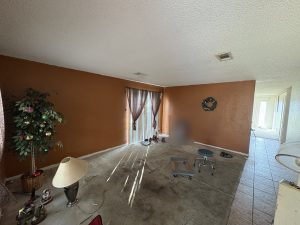
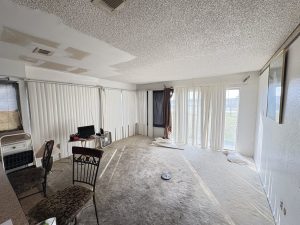
The house is a single-story brick ranch with board-and-batten gable ends and solar screens over the windows. On the side elevation a long section of fascia board had pulled away from the eave and was hanging free, with service wiring dangling loose beneath it; a windowsill below had rotted through and dropped its trim into the grass. Round the back, the lawn had gone to seed and the shrub line had grown into the fence. Inside, the rooms told the story better than any inspection report — a decorated artificial Christmas tree still standing in the corner, a wreath still on the wall, ornaments on the floor, and carpet so far gone to water and dirt that the pattern had disappeared. In the den the ceiling carried a large unfinished drywall patch where a leak had been opened up and never closed.
An abandoned house does not sit still. It deteriorates on a curve, and every month adds to the bill. The open fascia was the visible half of the problem — behind it, water had been running into the eave and down the wall for at least a season, and the drywall patch in the den showed the roof had already failed elsewhere and been half-addressed. Wet carpet on a slab in Houston humidity, in a house with no working climate control, produces exactly what you would expect. Nobody was going to get a mortgage on it.
The rest of the problem was administrative. A deed-restricted subdivision does not tolerate an overgrown lot and a failing elevation indefinitely, and where notices go unanswered, charges follow onto the account. Meanwhile the property taxes ran, the insurance had almost certainly lapsed or been rewritten to exclude the risks that matter in a vacant house, and the family was maintaining nothing while remaining responsible for everything. Their realistic choices were to spend a large sum restoring a house nobody wanted, to list it as-is and watch financed buyers fall away one by one at inspection, or to sell to someone who would take the whole situation in one transaction.
We made a written cash offer on the property in the condition it was in, with everything still inside it. Nothing had to be cleared out — not the tree, not the furniture, not the ornaments, not a single bag. No repairs were requested, no cleaning, no lawn work and no requirement that the family come back to the house at all if they did not want to.
This one took twenty-six days rather than the nine or ten a simple file takes, and the extra time went where it needed to: title. A house abandoned for a long stretch usually has something attached to it, and the outstanding items had to be identified, quantified and arranged for payoff at closing so the family walked away genuinely finished rather than nominally finished. We handled that work and its cost. With no lender in the file, nothing had to be habitable, appraised or approved by anyone — the only real gate was clearing title, and once the curative work was done the closing followed immediately. The family signed, everything owed on and against the house was settled out of the proceeds, and a property that had been quietly costing them money for years stopped being theirs.
Woodland Trails is a Harris County community of more than five hundred homes laid out in four sections in the 77040 ZIP code, with most of the housing built between about 1972 and 1975. The homes are single-story brick ranches, typically three bedrooms and two baths, on lots that in many cases back directly onto the greenbelt — one of the neighbourhood’s genuine distinguishing features, since a number of properties have private trail access straight from the back yard. The subdivision is organised as a Community Improvement Association in which every homeowner is automatically a member, and it maintains a swimming pool and a park pavilion for residents.
Children in this part of 77040 are served by Cypress-Fairbanks ISD, with Reed Elementary among the campuses drawing from the surrounding Woodland Trails and Woodland Oaks neighbourhoods. The commute is straightforward: U.S. 290 runs just north, Beltway 8 sits a short distance east, and Loop 610 and the Northwest Houston employment corridor are a quick run away, with Jersey Village and the Fairbanks retail strip at hand. It is a quiet, wooded, actively maintained subdivision — which is precisely why a house left to itself here stands out so sharply.
Most Houston-area subdivisions built from the 1960s onward are governed by recorded deed restrictions and a property owners’ association, and in Texas those associations have more enforcement power than many owners realise. The framework sits in Chapter 209 of the Texas Property Code, and it applies whether or not anyone is living in the house.
Enforcement begins with a written notice of violation — an unmown lot, a failing roof, peeling paint. Chapter 209 requires written notice and, for most curable violations, a reasonable opportunity to fix the problem before a fine can be levied, and owners generally have a right to a hearing before the board. Where the violation is not cured, the association may levy fines and often have the work done and charge the cost back. Crucially, notices go to the owner’s last address on file — so an owner who has moved and never updated it can accumulate a substantial file without seeing a single letter.
Unpaid assessments, fines and charges do not simply sit as a bill. In most Texas subdivisions the recorded declaration creates an assessment lien against the property itself, which the association can record and, subject to statutory notice and the protections Chapter 209 provides, ultimately move to foreclose on. Even where foreclosure is never pursued, the lien does its work elsewhere: it surfaces on the title commitment when the owner tries to sell, and must be paid from the proceeds before the buyer can take clean title — with interest and collection costs compounding throughout.
The practical lessons are simple. Request a written statement of account from the association early, because the number is rarely what people expect. Update the mailing address on file even if the house is empty. And recognise that association debt is one of the main reasons an abandoned property takes longer to sell than its condition alone would suggest — the title work outlasts the sale.
Northwest Houston is a market we buy in constantly. We've closed and funded purchases in
Oak Forest, Greater Inwood, Inwood Estates, Inwood North and Willowood, and out along
US-290 into Waller County and Hempstead.
As local cash buyers, we purchase Northwest Houston homes as-is: no repairs, no
cleaning, no fees, and no waiting on bank financing, with most closings done in a matter
of days. That includes original, never-updated homes on good lots — the kind of house
that gets picked apart by retail buyers and their appraisers.
If you own a house anywhere in Northwest Houston and would rather sell it as it stands
than renovate it first, we're happy to make you a free, no-obligation cash offer.
Or call us now :