We’re Here 24/7 — Speak With a Live Houston Agent Anytime:  346-360-4444

We’re Here 24/7 — Speak With a Live Houston Agent Anytime: 346-360-4444
Southwest Houston, TX
Distressed Property
12 Days
Rotted Siding and Trim
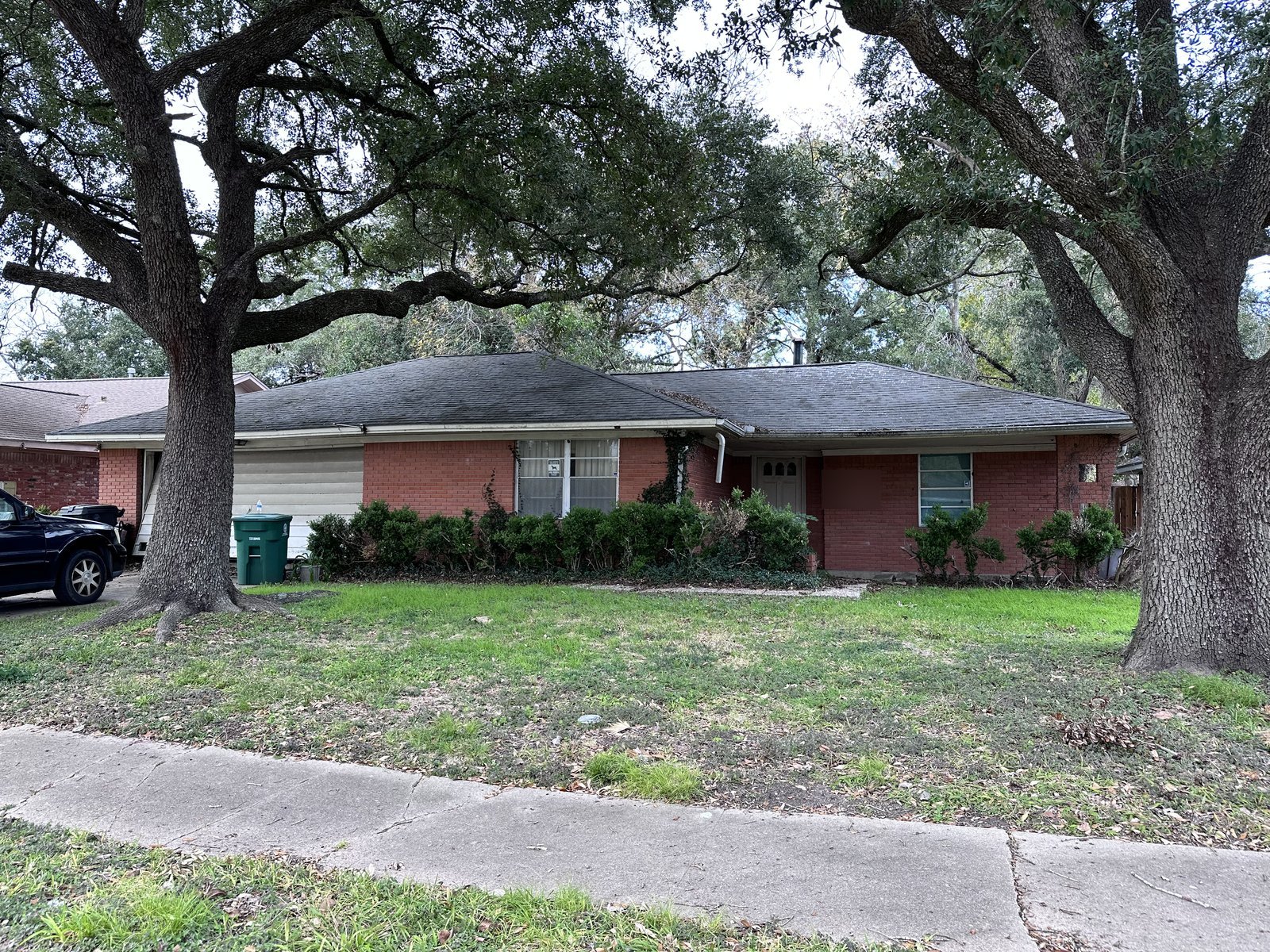
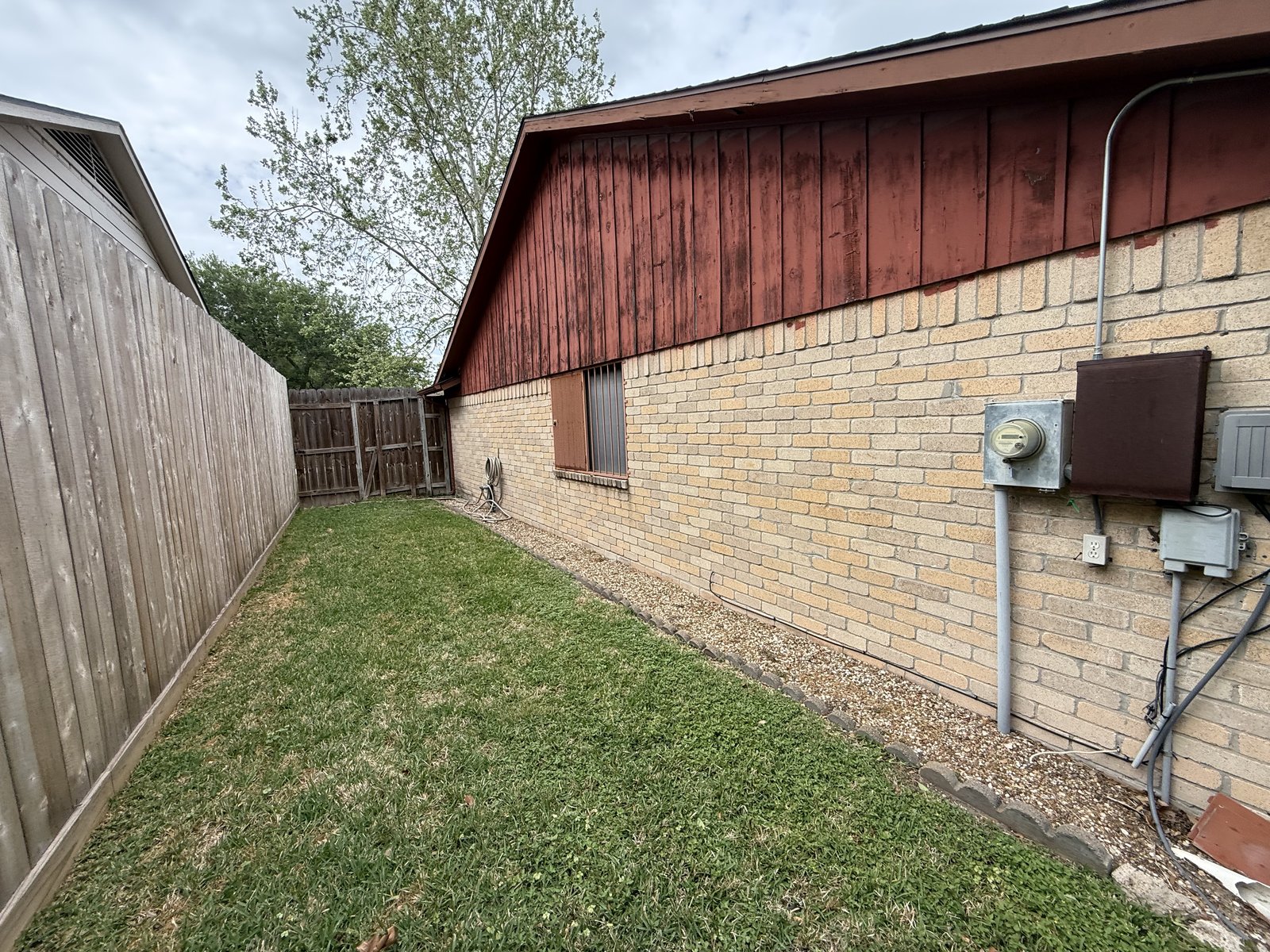
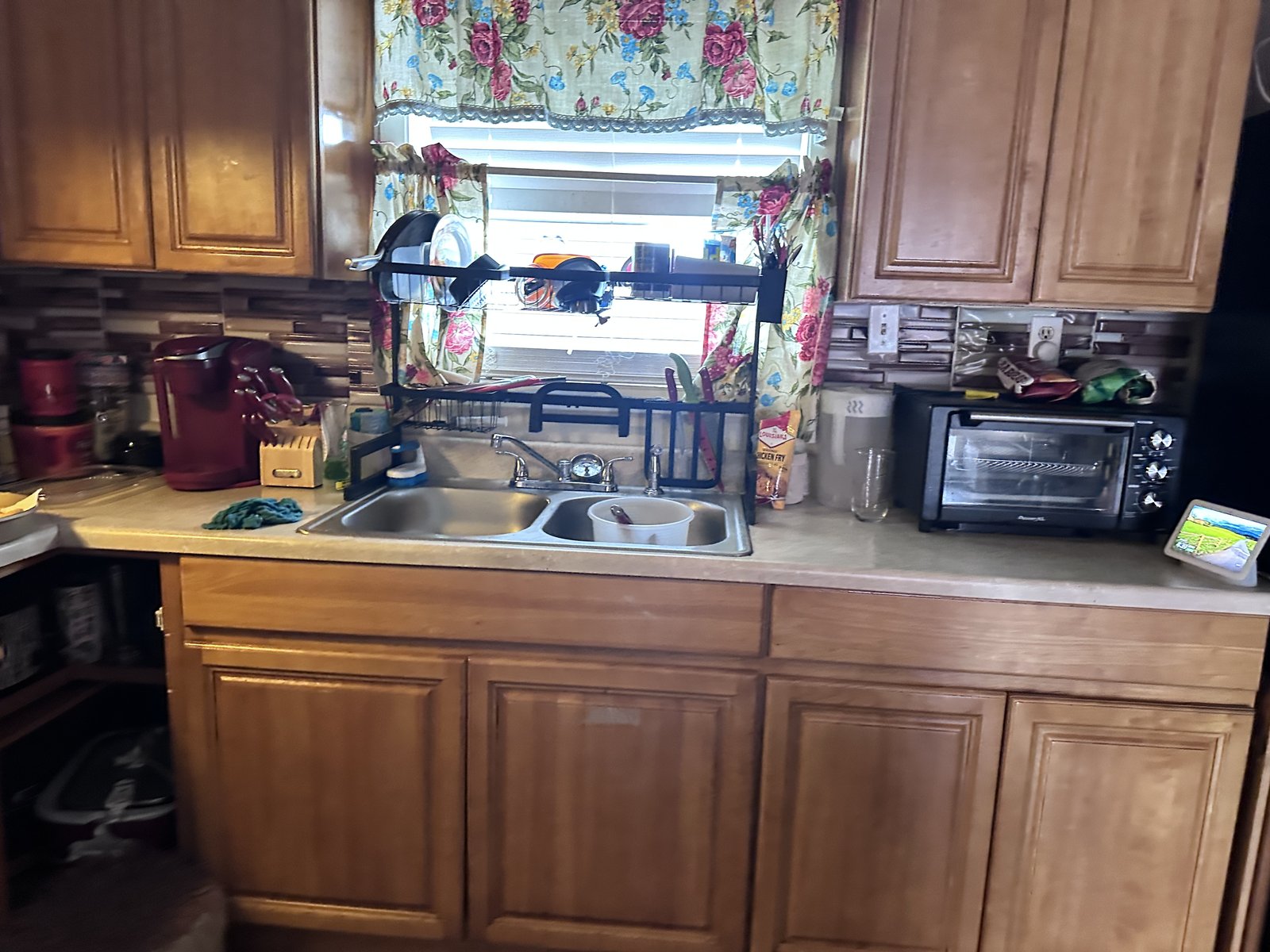
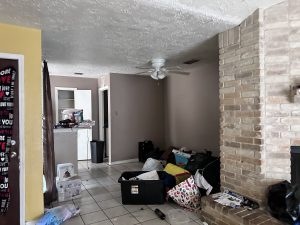
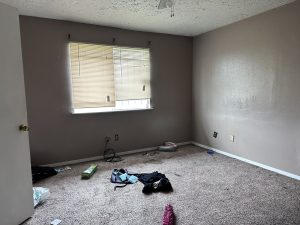
Ridgemont Pl sits in the Quail Bridge area of southwest Houston, one of the 1970s-era subdivisions in the belt of neighborhoods south of Beltway 8 near West Airport and South Post Oak. When the owner contacted us, the house was in the middle of an unfinished exit. Belongings were still scattered across the rooms — bags, boxes, a few pieces of furniture, things left behind when a move stalls. Outside, the hardboard siding had rotted through in places along the base of the walls, a window frame had failed and the glass was gone, and weeds had taken the strip along the foundation. It was a house that needed real work and had also stopped being lived in properly. The owner wanted it dealt with quickly and completely. Volcan Property Buyers bought it as-is, contents and all, and closed in 12 days.
The damage told a familiar Houston story. Hardboard and composite siding of that era swells and delaminates once water finds a way behind the paint, and once it starts at the bottom edge it works upward. Here the boards had blistered and crumbled around a window opening, the sill had rotted through, and the window itself was open to the weather — which meant everything inside was on a clock. Interior walls showed the patched-and-repainted history of a house maintained in stages, and the rooms held the debris of a departure rather than a life.
Rotted exterior siding is one of those defects that reads as small and prices as large. Replacing failed hardboard means removing it back to sound material, checking the sheathing and framing beneath for moisture damage, replacing the window, and repainting the affected elevations — and it’s rarely confined to the section you can see. A buyer’s inspector flags it immediately, and a lender will often require the exterior envelope be sound before funding. Meanwhile the open window meant the house was taking on humidity and rain, and the scattered belongings would have needed clearing before a single listing photograph could be taken.
We viewed the property and made a cash offer that covered the siding, the window, the interior work, and the cleanout — with none of it asked of the owner. He took what he wanted and left the rest exactly where it was. With no lender there was no appraisal, no repair addendum, and no insurance binder required on a house with an open window. The title company completed its search and the sale funded 12 days after the first call, with no commissions or fees.
Quail Bridge is one of a cluster of subdivisions in far southwest Houston developed through the 1970s as the city expanded past Beltway 8 toward Fort Bend County. The area sits near West Airport Boulevard and South Post Oak Road, in the band of neighborhoods that includes Ridgemont, Quail Run, and the surrounding communities built for families working across Houston’s southwest quadrant. The housing here is characteristic of its era: single-story homes with composite and hardboard siding, attached garages, and modest lots on curved suburban streets — a construction style that has aged less gracefully than the brick ranches built a decade or two earlier, which is why exterior repair is such a common need in these neighborhoods. Beltway 8 runs just to the north, Highway 6 and Fort Bend County lie to the west, and Missouri City and Sugar Land are both nearby. It’s an affordable, practical part of the metro where a large share of properties change hands as renovation projects.
Houston’s climate is uniquely hard on the outside of a house. Roughly fifty inches of rain a year, sustained humidity, and long stretches of intense sun combine to attack exterior materials continuously — and the materials used on homes built in the 1960s through 1980s were often not up to it.
The most common failure is hardboard or composite siding. It’s essentially compressed wood fiber, and it performs adequately as long as the paint film stays perfect. Once water penetrates — at a nail head, a cut edge, a joint, or the bottom course closest to the ground — the board absorbs it, swells, and delaminates. Because the damage starts where you look least, at the base of the wall behind shrubs, it’s often well advanced before anyone notices.
What makes it expensive is what’s usually behind it. Water that got through the siding has been sitting against the sheathing and sometimes the framing. Contractors rarely find rot confined to the boards they can see; opening the wall reveals soft sheathing, damaged studs, or insulation that has been wet long enough to grow mold. Window and door surrounds are the most frequent trouble spots, because that’s where flashing fails first — exactly the pattern on this house.
Costs vary widely with extent. Replacing a few damaged boards and repainting might run a couple of thousand dollars. Re-siding one or more elevations with proper repair of the substrate, new flashing, window replacement, and repainting the whole exterior more commonly runs $8,000 to $25,000 on a modest home — and that assumes no structural framing repair is needed.
For sellers, the timing matters. Rotted siding and a failed window are visible in the first photograph a buyer sees, and they cue every other worry: is there water damage inside, is there mold, has the roof been maintained. Lenders frequently require a sound exterior envelope before funding, and insurers hesitate on properties with open or failed windows. The result is a house that either sits or attracts offers well below what the repair would have cost.
Selling as-is to a cash buyer prices the exterior work into the offer up front. There’s nothing to repair, nothing to paint, no inspection to survive, and no risk of discovering framing damage halfway through a project you’re funding.
Volcan Property Buyers buys homes with rotted siding, failed windows, water intrusion, and every other consequence of Houston’s climate — across Quail Bridge, Ridgemont, Brays Oaks, Missouri City and the wider southwest side. Request a no-obligation cash offer and let the exterior be our problem.
Southwest Houston is a market we buy in year-round. We've closed and funded purchases in
Sharpstown, Westbury, Braeburn Glen, Robindell, Meyerland, Brays Oaks, Southglen, Quail
Bridge, Central Southwest and Mission Bend, and down the coast in Clute.
As local cash buyers, we purchase Southwest Houston homes as-is: no repairs, no
cleaning, no fees, and no waiting on bank financing, with most closings done in a matter
of days. Flood history, dated finishes and tenants in place are all things we work
around rather than deduct for at the last minute.
If you own a home anywhere in Southwest Houston and want certainty on the closing date,
we're happy to make you a free, no-obligation cash offer.
Or call us now :